



интегрированный прокатный стан
/Automated Packaging in 2025: trends, specs, and a steel-line insider’s view If you’re pricing an automated packaging machine right now, you’re not alone. Every month I talk to ops managers who are chasing higher OEE and fewer returns, and—to be honest—trying to make sense of a crowded vendor landscape. The mood? Cautiously optimistic. AI vision is getting practical, energy efficiency is finally measurable, and modular frames aren’t just marketing fluff anymore. Actually, it’s the integration story that decides winners. Quick context from the metals side: on galvanizing lines where coils and sheets pass through a skin pass mill, downstream packaging has to keep up with flatness targets and micro-roughness specs. Beijing YWLX Science & Tech. Co., from No.1518, LAR Valley Int’l, Guang’anmen Avenue, Xicheng District, Beijing, 100055, builds the upstream skin pass equipment used on zinc and Al-Zn lines across China. When the mill improves flatness and knocks out yield plateau/stretcher strains, your automated packaging machine sees fewer misfeeds and more consistent stacking. Simple as that, but surprisingly impactful. A production-line view: upstream sheet conditioning influences downstream automated packaging machine stability. What’s working now (and what’s hype) Vision + ML: auto-reject accuracy ≈ 98% in clean-light environments; real-world use may vary. Modularity: quick-change formers and tool-less guides cut changeovers by around 30–40%. Energy: high-efficiency heaters and smart idling save 10–18% kWh in continuous ops. Sustainability: thinner PE films, recyclable trays, and verified seal integrity via ASTM/ISTA tests. Process flow, materials, and test standards A typical automated packaging machine line (carton or FFS) goes like this: Materials: films (PE, PP, PET), cartons (B-flute, E-flute), straps (PET/PP), labels, corner protectors. Methods: form/erect → weigh/verify → fill → seal (impulse/band/hot-melt) → print/label → case check → palletize. Testing: seal integrity (ASTM F88), ship testing (ISTA 3A/6), distribution cycles (ASTM D4169), electrical safety (IEC 60204-1). Service life: ≈ 10–15 years with quarterly PM; MTBF targets of 2,500–4,000 h are common. Industries: food & beverage, e-commerce 3PL, pharmaceuticals, home care, and coil/sheet packaging after skin-pass lines. Illustrative product specs (mid-range line) Model APM-1800 Throughput ≈ 30–120 packs/min (format-dependent) Package formats Pillow, gusset, stand-up pouch; RSC cartons Max web width / carton size Film 700 mm; carton up to 600×400×400 mm Seal type Impulse or continuous band; leak test optional Accuracy Weight check to ±0.5–1.0 g (with checkweigher) Power / Air 380–480V, 3Φ, 6–12 kW; 0.6–0.8 MPa, ≈ 200–500 L/min Noise ≤ 78 dB(A) at 1 m Certifications CE (Machinery Directive), ISO 13849-1 PL d, IEC 60204-1 Vendors at a glance (real-world, hedged) Vendor Strength Integration Certs Typical price Beijing YWLX (line context) Upstream skin pass mill expertise for galvanized sheet stability Strong on coil/sheet line alignment; pairs well with downstream automated packaging machine integrators ISO-based QA; line safety to ISO 12100 Project-based EuroPack Systems High-speed carton/FFS, solid CE documentation MES/SCADA adapters, OPC UA CE, ISO 13849-1 $$$ (≈ mid–high) Local Integrator Customization, responsive service Fast mechanical tweaks; moderate software stack Varies (check panel certifications) $–$$ Field notes and mini case studies 3PL e-commerce hub: modular automated packaging machine cut changeover by 35%, OEE to 92%, payback ≈ 14 months. Galvanized sheet line: after skin-pass roughness tuning, corner-protector robot reduced rewraps by 28% and pallet stability claims dropped below 0.5%. Many customers say the win is less glamorous: fewer fiddly adjustments and better documentation. I guess that’s adulthood in operations. Compliance checklist Machinery safety: ISO 12100, ISO 13849-1/IEC 62061; electrical: IEC 60204-1; CE 2006/42/EC. Packaging validation: ISTA 3A/6, ASTM D4169; seals: ASTM F88. Metals context: coil/sheet standards like ASTM A653 or GB/T 2518 for galvanized product specs upstream. Citations ISO 12100: Safety of machinery — General principles ISO 13849-1: Safety-related parts of control systems IEC 60204-1: Safety of machinery — Electrical equipment ISTA Procedure Series (e.g., 3A, 6A) for packaged-products ASTM D4169: Performance Testing of Shipping Containers ASTM F88: Seal Strength of Flexible Barrier Materials EU Machinery Directive 2006/42/EC ASTM A653: Steel Sheet, Zinc-Coated (Galvanized)

We have successfully executed over 500
projects around the world,
many first-of-their-kind
research projects and products in China, including
We have successfully executed over 500
projects around the world,
many first-of-their-kind
research projects and products in China, including
-
2004
The 1st hydraulic AGC system for hot rolling of ribbon steel
-
2006
The 1st AFC system used for 1450mm skin pass mill
-
2009
The 1st 5-stand tandem line with 2-stand POR & Uncoiler for 650mm ribbon steel
-
2012
The 1st reversing mill for 1380mm strip
-
2016
The 1st soft-rolling system used in skin pass mill
-
2019
The 1st fully automated medium-width tandem cold rolling mill
-
2021
The 1st 5000KN Twin-stand double skin pass mill
-
2022
The 1st coupled pickling line & tandem cold mill with two modes - big roller & small roller
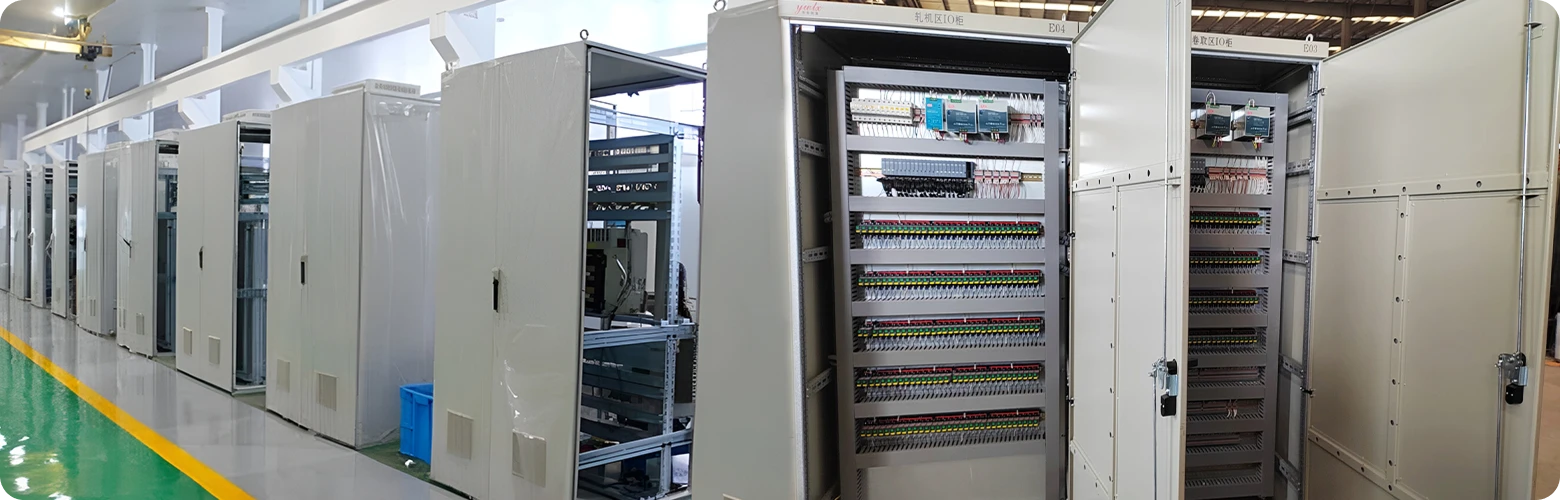
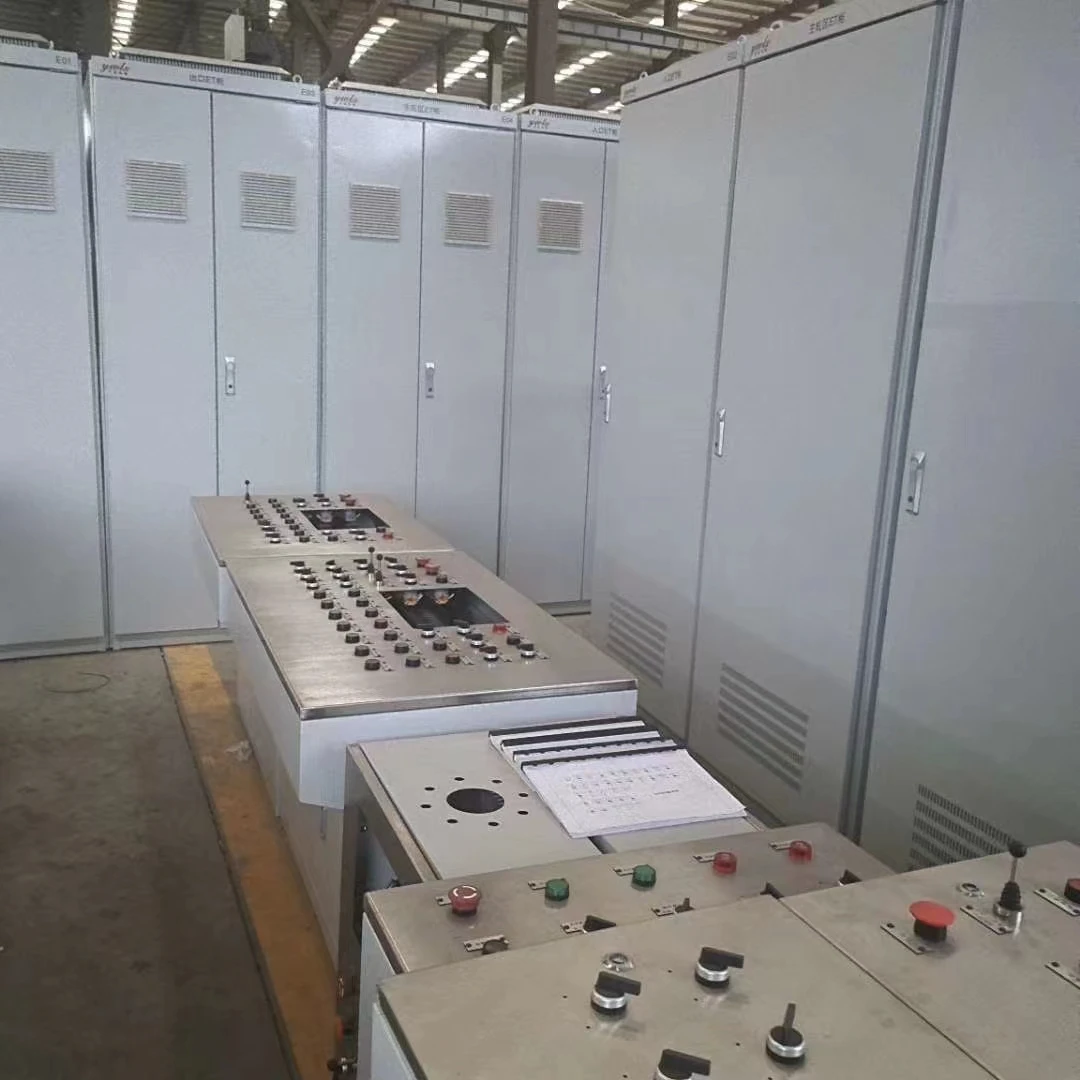
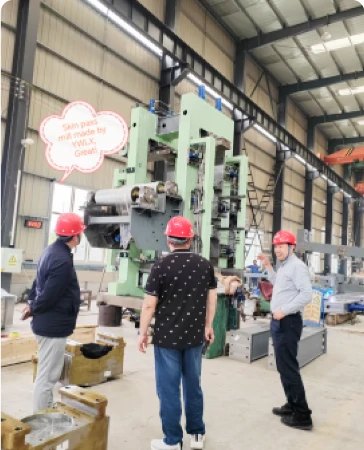
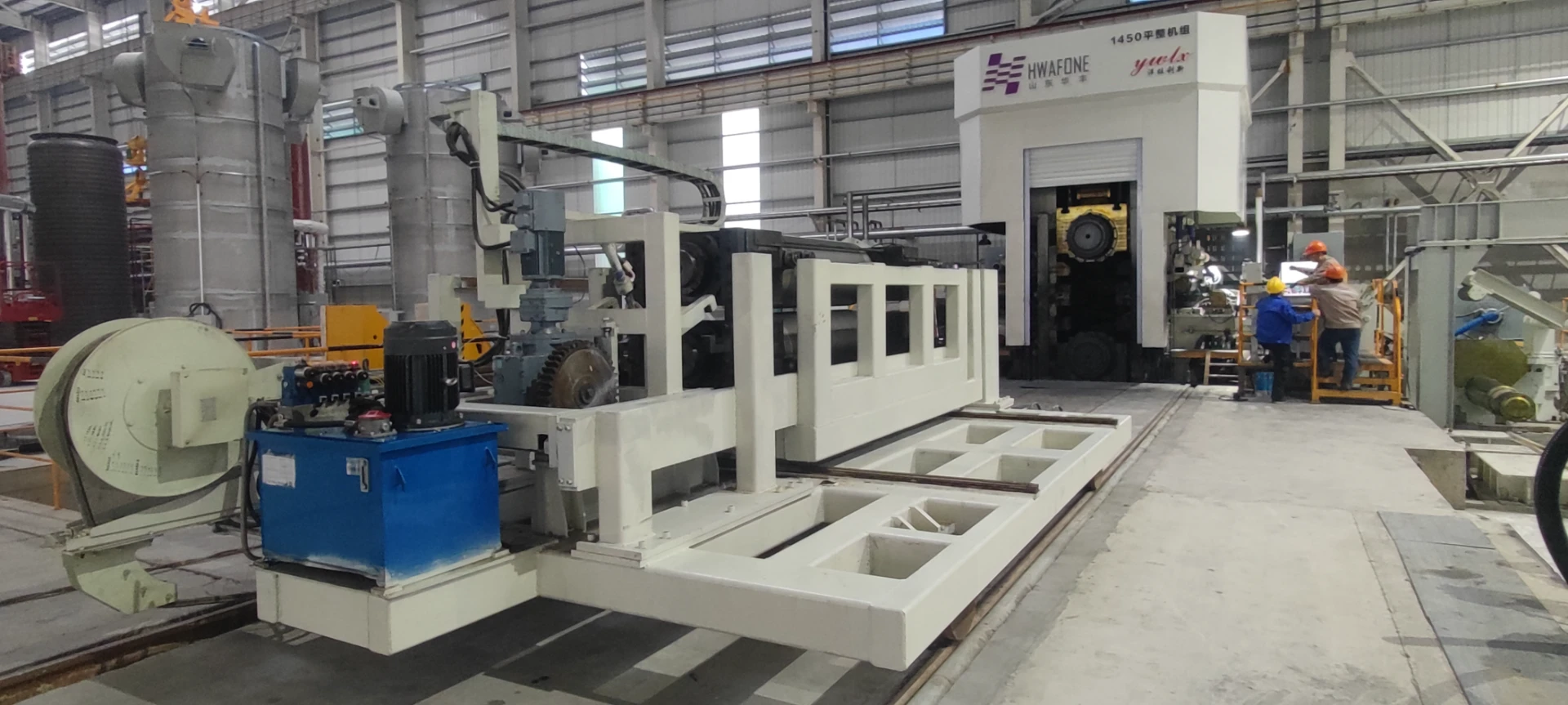
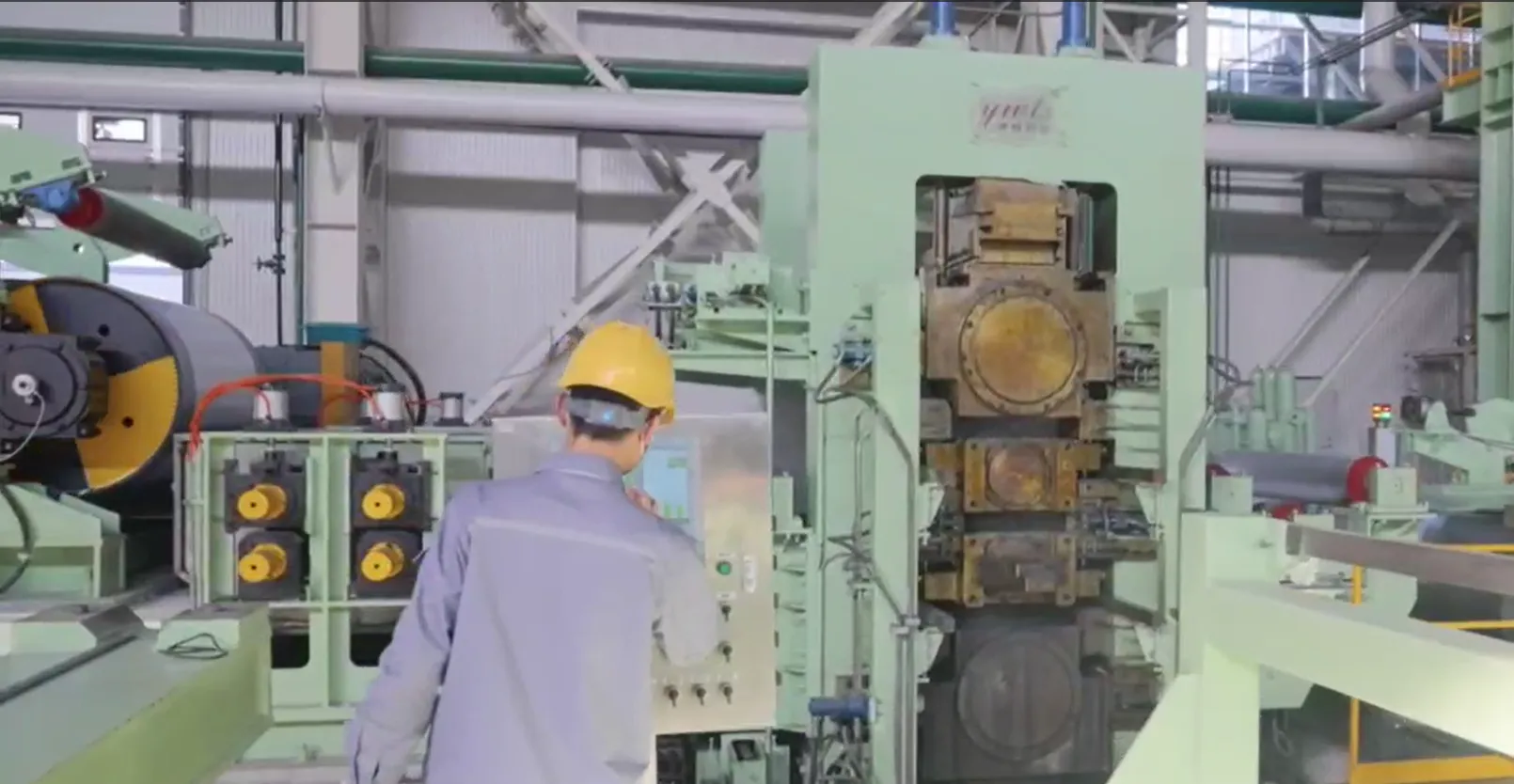
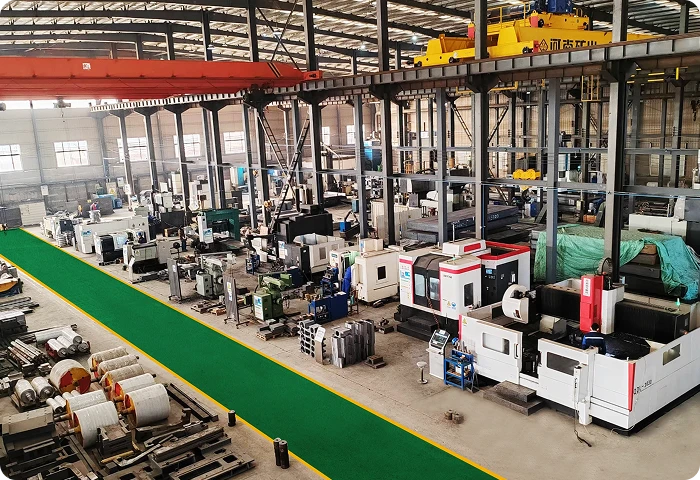
Yang Wang Li Xin operates a state-of-the-art facility over 66,000 square meters,and our manufacturing facility is fully equipped with high-tech machinery and high-capacity cranes. This enables us to handle large work pieces measuring 4.5m in width, 10m in length, and 1.5m in height, guaranteeing our capacity to produce 1800mm skin-pass mills and 1450mm rolling mills. The individual piece can weigh up to 100 tons.

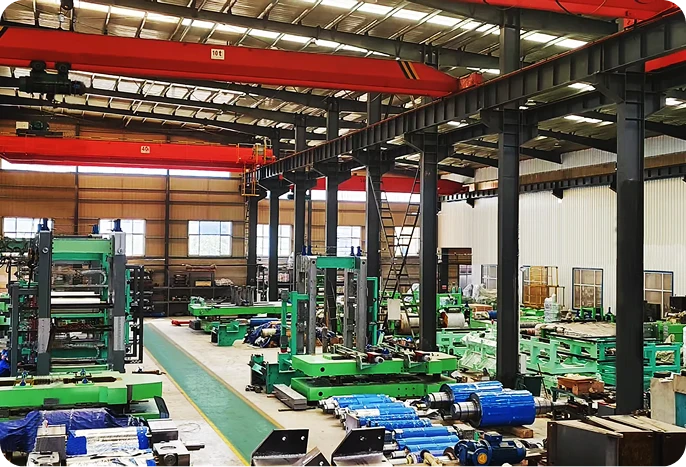

Quality is fundamental to the enterprise survival. We have established a comprehensive and meticulous quality management system and have successfully obtained ISO14000 certification. Starting from the design source, it supervises the entire production cycle, including design, procurement, processing, assembly, in-factory testing, installation, and online commissioning. The workshop is equipped with measuring tools like vernier calipers, spectrometers, hardness testers, and ultrasonic flaw detectors. They are used to check materials and control tolerances to ensure the final equipment meets or exceeds requirements. All products have a unique code, This enables the easy identification and traceability of the equipment components and ensures full control of quality.


-
 Application and Challenges of Reversible Cold Rolling Mill in Stainless Steel RollingThe reversible cold rolling mill has become an indispensable component in modern stainless steel manufacturing, offering unique advantages in processing high-grade alloys. Unlike traditional tandem mills, a reversing cold rolling mill enables multiple passes of the same strip through a single stand, making it particularly suitable for small-to-medium batch production of specialty steels. This flex
 -
 wire rolling machineWire rolling machines are an essential component in the manufacturing industry, playing a pivotal role in shaping and refining metal wires for various applications. Understanding the intricacies of these machines not only enhances operational efficiency but also ensures product quality and compliance with industry standards. Leveraging years of expertise in the field, this article delves into the
 -
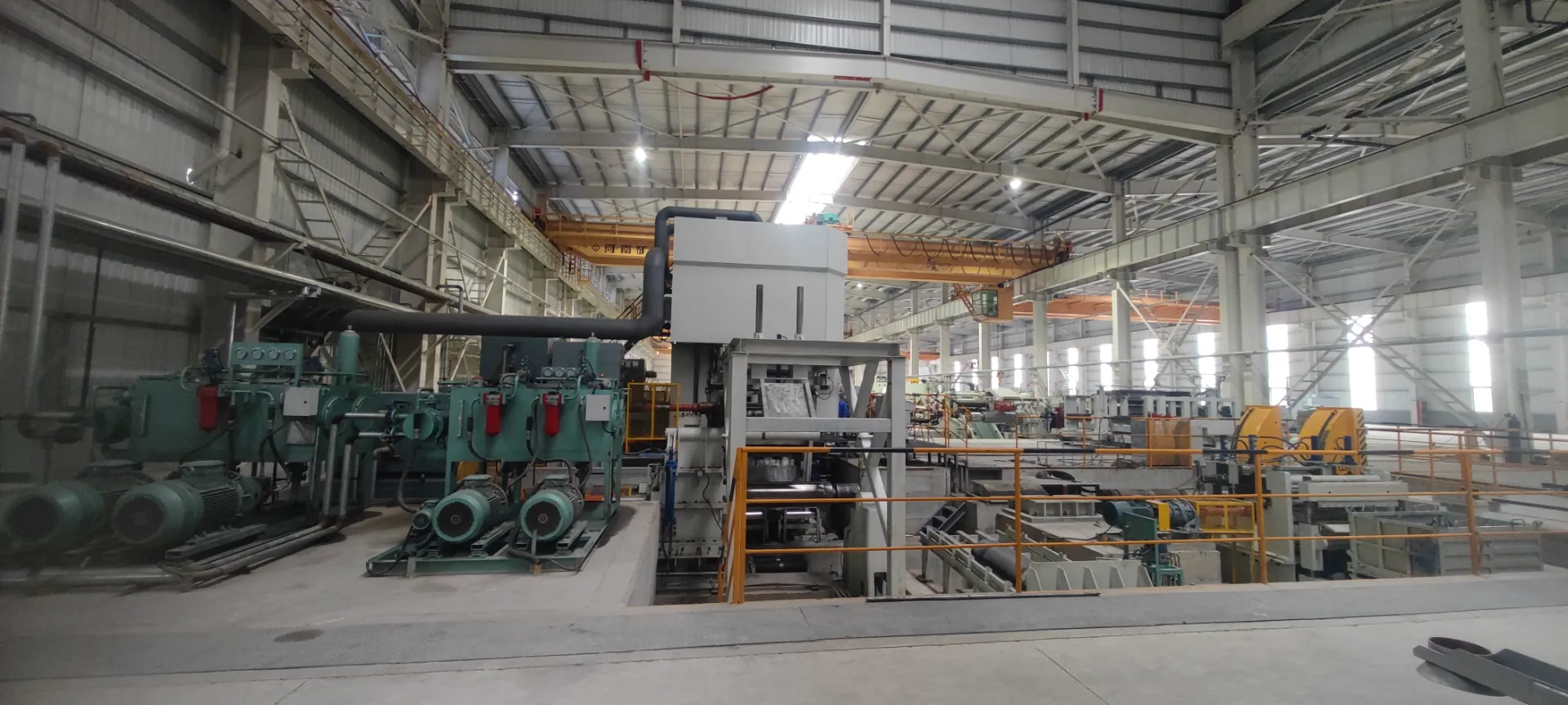 housingless rolling millHousingless rolling mills represent a groundbreaking innovation in the metallurgy industry , revolutionizing how businesses approach and manage the rolling process. This state-of-the-art technology is gaining traction for its efficiency, adaptability, and cost-effectiveness, positioning it as a cornerstone in modern steel production. Experience plays a crucial role in the successful implementation


